


Understanding Chronic Condition Special Needs Plans (C-SNPs)

August 26, 2026

How Medicare Advantage Plans Built Around Your Condition May Support Your Care


Living with a serious chronic condition takes work. You juggle appointments, medications, and specialists. A Chronic Condition Special Needs Plan, called a C-SNP, is one type of Medicare plan built for people in exactly that spot.


Here's what a C-SNP is and who it may help.


What is a C-SNP?


A C-SNP is a type of Medicare Advantage Plan (Part C). Private insurance companies offer these plans, and Medicare approves them. They must follow Medicare's rules and cover what Medicare requires.


What sets a C-SNP apart is its focus. Each plan is built around one chronic condition or a group of related conditions. The benefits, provider network, and drug list are shaped to fit the people the plan serves.


How a C-SNP works


A C-SNP works much like other Medicare Advantage Plans. It includes:


  • Part A (hospital insurance)
  • Part B (medical insurance)
  • Part D (prescription drug coverage)


One point worth knowing: every Special Needs Plan must include Medicare drug coverage. So a C-SNP always comes with Part D.


The plan covers all medically necessary services that Original Medicare covers. Many plans add extra benefits on top of that.


Because these plans coordinate your care, you generally need to use doctors and providers in the plan's network. Emergencies, and urgently needed care or dialysis when you are outside the C-SNP's service area, are the exception. Some services may need prior approval before the plan pays. Rules vary from plan to plan, so check the details before you enroll.


Who can enroll?


To join a C-SNP, you must:


  • Have Medicare Part A
  • Be enrolled in Medicare Part B
  • Live in the plan's service area
  • Have a qualifying chronic condition, confirmed by your medical records


The 2026 Medicare & You handbook lists examples such as diabetes, End-Stage Renal Disease (ESRD), HIV/AIDS, chronic heart failure, and dementia. Some plans cover a single condition. Others cover a group of related conditions. Your eligibility depends on both your diagnosis and the plan's rules. You can stay enrolled in the C-SNP only if you continue to meet the condition served by the plan. If you no longer meet the plan's conditions, you may be eligible for a Special Enrollment Period to join another plan.


What makes a C-SNP different?


A standard Medicare Advantage Plan serves a broad group of people. A C-SNP narrows the focus to your condition. Depending on the plan, you may find:


  • A provider network experienced with your condition
  • A care coordinator to help manage your treatment plan
  • A drug list built around your condition
  • Programs that support medication use and day-to-day management


Every plan still follows Medicare guidelines and federal coverage rules.


What you might pay


Costs depend on the plan you pick. You may pay:


  • A monthly premium, in addition to your Part B premium
  • Copayments or coinsurance for services
  • Deductibles for medical care, drugs, or both


Every Medicare Advantage Plan, including a C-SNP, sets a yearly limit on what you pay out of pocket for Part A and Part B covered services. Once you reach that limit, you pay nothing for those covered services for the rest of the year. The limit amount is different from one plan to the next, so compare before you choose.


Is a C-SNP right for you?


A C-SNP may be worth a look if you:


  • Have a qualifying chronic condition
  • Want a plan built around that condition
  • Like the idea of a coordinated care team and focused support


It is not the only option. A regular Medicare Advantage Plan, or Original Medicare paired with other coverage, may fit you better. The right choice depends on your health, your doctors, and your budget.


Where to get help


C-SNPs can be confusing to navigate, but we're here to help. You can work with our team of licensed agents to find out about your options.

Smiling pair in close-up, one wearing glasses, sharing a warm moment indoors
August 19, 2026
Original Medicare doesn’t cover hearing aids, but you still have options. Here’s a clear breakdown of Medicare Advantage, OTC hearing aids, and other ways to save.

Man riding a red mobility scooter on a park path with green grass and trees.
August 12, 2026
Thinking about a wheelchair or mobility scooter? Learn what Medicare covers under Part B, what your doctor must document first, and how to avoid a denied claim.
Person holding a stack of colorful mail and an envelope while seated indoors on a couch
August 6, 2026
Every fall, Medicare Advantage and Part D plans mail an Annual Notice of Change. Learn what it means for your costs, coverage, and doctors next year.

Person seated at a desk, gesturing toward a laptop in a home office.
By Cynthia Macluskie July 28, 2026
Open enrollment for 2027 ACA coverage ends earlier, and the February start date is going away. Find the currently-known national schedule and your state's timelines here.
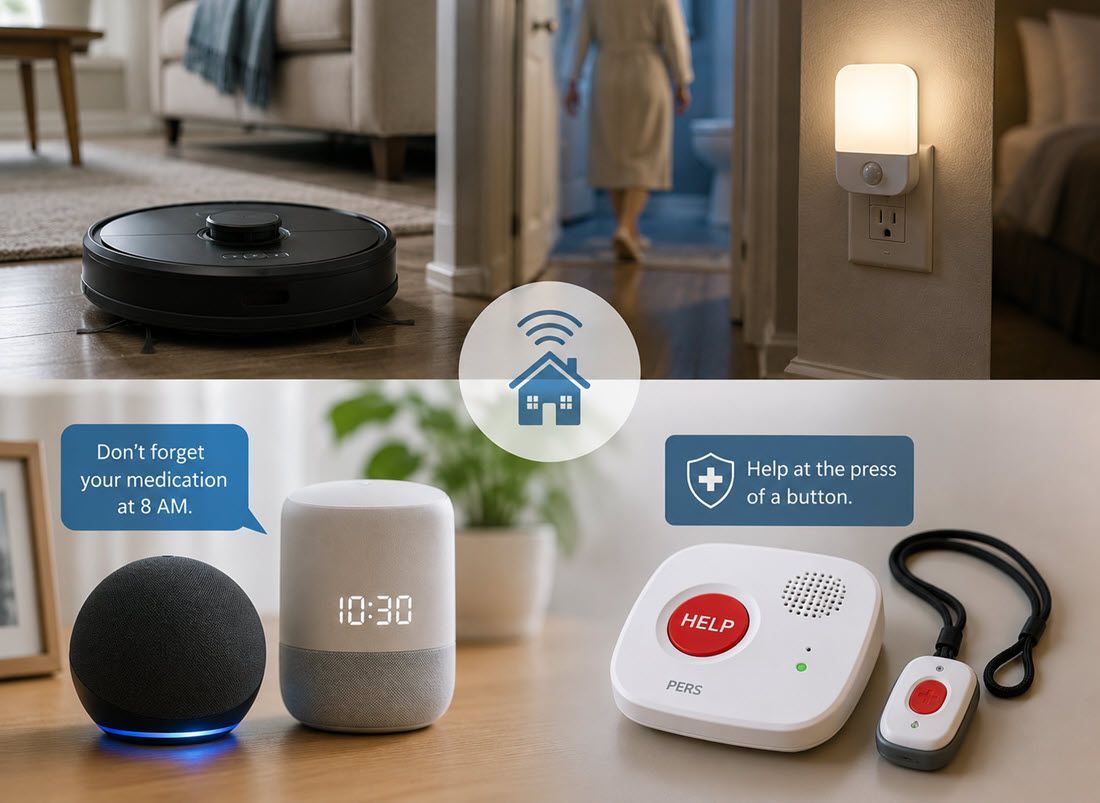
Smart home devices: robot vacuum, voice assistants, thermostat, doorbell, and wall light icon.
By Cynthia Macluskie July 24, 2026
See how smart lighting, robot vacuums, stove shut-offs, medication reminders, and fall monitors can help seniors at home, plus what Medicare and Medigap do and do not cover.

Show More

Share

Smiling pair in close-up, one wearing glasses, sharing a warm moment indoors
August 19, 2026
Original Medicare doesn’t cover hearing aids, but you still have options. Here’s a clear breakdown of Medicare Advantage, OTC hearing aids, and other ways to save.
Man riding a red mobility scooter on a park path with green grass and trees.
August 12, 2026
Thinking about a wheelchair or mobility scooter? Learn what Medicare covers under Part B, what your doctor must document first, and how to avoid a denied claim.
Person holding a stack of colorful mail and an envelope while seated indoors on a couch
August 6, 2026
Every fall, Medicare Advantage and Part D plans mail an Annual Notice of Change. Learn what it means for your costs, coverage, and doctors next year.
Person seated at a desk, gesturing toward a laptop in a home office.
By Cynthia Macluskie July 28, 2026
Open enrollment for 2027 ACA coverage ends earlier, and the February start date is going away. Find the currently-known national schedule and your state's timelines here.
Smart home devices: robot vacuum, voice assistants, thermostat, doorbell, and wall light icon.
By Cynthia Macluskie July 24, 2026
See how smart lighting, robot vacuums, stove shut-offs, medication reminders, and fall monitors can help seniors at home, plus what Medicare and Medigap do and do not cover.
Smiling person in a straw hat and black shirt outdoors, holding the hat brim.
By Cynthia Macluskie July 21, 2026
Learn what Medicare covers for skin cancer screenings, dermatologist visits, biopsies, and treatment, plus tips for prevention and early detection.
Person lying on a gray couch under a teal blanket in a living room
By Cynthia Macluskie July 17, 2026
GLP-1 medications help you eat less — but eating less can mean fewer nutrients. Here's what the latest research shows and how to eat well.
Woman typing at a desktop computer in an office, seated at a white desk with a focused expression.
May 27, 2026
Learn why updating your income and household info on an ACA plan helps you avoid tax surprises, stay eligible, and access the right savings.
Scrabble tiles on red background spell “MENTAL HEALTH MATTERS.”
May 20, 2026
Learn how Medicare covers mental health services, including therapy, counseling, and screenings, and how to access support when you need it.
By Cynthia Macluskie May 14, 2026
Arizona Health Care Cost Containment System recently updated the ABA policy, and it is now open for public comment. There are many positive improvements within the proposal, including stronger fingerprinting, criminal background check, and abuse registry requirements for certain ABA providers. However, I do not believe the proposed protections go far enough. Children and vulnerable adults receiving ABA services often interact with many individuals throughout the day beyond credentialed clinical staff. Front office personnel, float staff, transportation staff, aides, interns, volunteers, and others may all have access to vulnerable members. Safety standards should not depend on a billing code or job title. They should depend on access to a vulnerable person. Any individual who may supervise, transport, escort, monitor, or otherwise interact with a vulnerable member should be required to complete fingerprinting, criminal background checks, and abuse registry screening before member contact occurs. In addition, providers serving vulnerable populations through Arizona Department of Economic Security Division of Developmental Disabilities, AHCCCS, and contracted health plans should all be held to the same strict safety standards. Protecting vulnerable children and adults should always be the priority. If you wish to learn more please use the link below: https://scs-public.s3-us-gov-west-1.amazonaws.com/env_production/oid347/did200055/pid_214247/project-documents/AMPM%20POLICY%20320-S.pdf If you would lik e to comment on the policy use the link below: https://ahcccs.commentinput.com/?id=8e7uZSx2hH
Show More