


February Is American Heart Month — Show Your Heart Some Love

Cynthia Macluskie • February 4, 2026

February isn’t just about Valentine’s Day—it’s also American Heart Month, a time dedicated to raising awareness about heart health and encouraging simple steps to protect one of your most vital organs: your heart.


Heart disease remains the leading cause of death in the United States, but the good news is that many risk factors are preventable or manageable with the right habits and healthcare support. American Heart Month is a perfect reminder to pause, reflect, and show your heart a little extra love—today and all year long.


Taking care of your heart doesn’t require drastic changes. Small, consistent actions can make a meaningful difference. Staying active with regular movement, choosing heart-healthy foods, managing stress, and getting enough sleep all contribute to better cardiovascular health. Even something as simple as a daily walk or swapping processed foods for fresh fruits and vegetables can support a stronger heart over time.


Preventive care also plays a crucial role in heart health. Routine checkups help monitor blood pressure, cholesterol levels, and other key indicators that may not show symptoms early on. Many health insurance plans cover preventive services such as annual wellness visits and cardiovascular screenings at little or no cost. These benefits are designed to help catch potential issues early, when they’re often easier to manage.


Stress is another factor that can quietly impact your heart. While life can be busy and unpredictable, finding healthy ways to unwind—such as deep breathing, light exercise, hobbies, or spending time with loved ones—can support both your mental well-being and your heart. Your heart works hard for you every day, and it deserves moments of rest, too.


This American Heart Month, consider making one small commitment to your heart—whether it’s scheduling a checkup, adding more movement to your day, or learning more about your health coverage options. And remember, you don’t have to navigate these decisions alone. A trusted insurance professional can help you understand your benefits and ensure you’re making the most of the coverage available to support your long-term health.


Your heart has been with you through every moment of your life. This February, take a little time to return the favor.

Smiling pair in close-up, one wearing glasses, sharing a warm moment indoors
August 19, 2026
Original Medicare doesn’t cover hearing aids, but you still have options. Here’s a clear breakdown of Medicare Advantage, OTC hearing aids, and other ways to save.

Man riding a red mobility scooter on a park path with green grass and trees.
August 12, 2026
Thinking about a wheelchair or mobility scooter? Learn what Medicare covers under Part B, what your doctor must document first, and how to avoid a denied claim.
Person holding a stack of colorful mail and an envelope while seated indoors on a couch
August 6, 2026
Every fall, Medicare Advantage and Part D plans mail an Annual Notice of Change. Learn what it means for your costs, coverage, and doctors next year.

Person seated at a desk, gesturing toward a laptop in a home office.
By Cynthia Macluskie July 28, 2026
Open enrollment for 2027 ACA coverage ends earlier, and the February start date is going away. Find the currently-known national schedule and your state's timelines here.
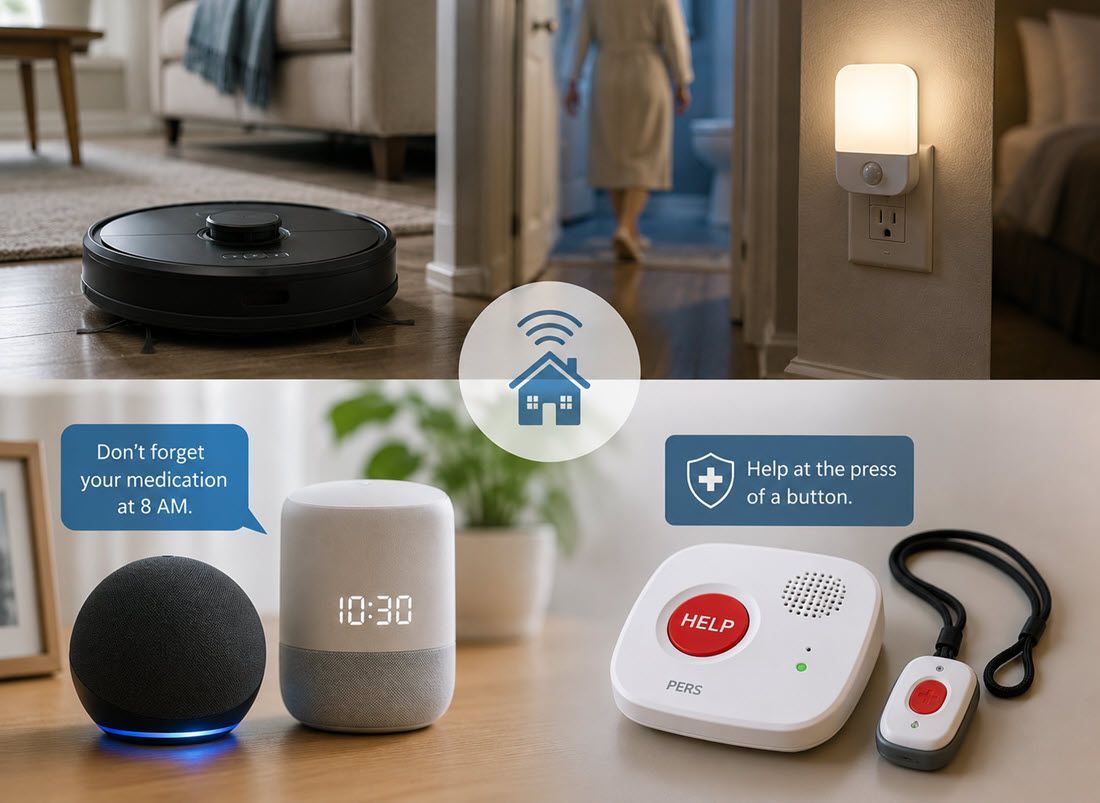
Smart home devices: robot vacuum, voice assistants, thermostat, doorbell, and wall light icon.
By Cynthia Macluskie July 24, 2026
See how smart lighting, robot vacuums, stove shut-offs, medication reminders, and fall monitors can help seniors at home, plus what Medicare and Medigap do and do not cover.
Show More

Share

Smiling pair in close-up, one wearing glasses, sharing a warm moment indoors
August 19, 2026
Original Medicare doesn’t cover hearing aids, but you still have options. Here’s a clear breakdown of Medicare Advantage, OTC hearing aids, and other ways to save.
Man riding a red mobility scooter on a park path with green grass and trees.
August 12, 2026
Thinking about a wheelchair or mobility scooter? Learn what Medicare covers under Part B, what your doctor must document first, and how to avoid a denied claim.
Person holding a stack of colorful mail and an envelope while seated indoors on a couch
August 6, 2026
Every fall, Medicare Advantage and Part D plans mail an Annual Notice of Change. Learn what it means for your costs, coverage, and doctors next year.
Person seated at a desk, gesturing toward a laptop in a home office.
By Cynthia Macluskie July 28, 2026
Open enrollment for 2027 ACA coverage ends earlier, and the February start date is going away. Find the currently-known national schedule and your state's timelines here.
Smart home devices: robot vacuum, voice assistants, thermostat, doorbell, and wall light icon.
By Cynthia Macluskie July 24, 2026
See how smart lighting, robot vacuums, stove shut-offs, medication reminders, and fall monitors can help seniors at home, plus what Medicare and Medigap do and do not cover.
Smiling person in a straw hat and black shirt outdoors, holding the hat brim.
By Cynthia Macluskie July 21, 2026
Learn what Medicare covers for skin cancer screenings, dermatologist visits, biopsies, and treatment, plus tips for prevention and early detection.
Person lying on a gray couch under a teal blanket in a living room
By Cynthia Macluskie July 17, 2026
GLP-1 medications help you eat less — but eating less can mean fewer nutrients. Here's what the latest research shows and how to eat well.
Woman typing at a desktop computer in an office, seated at a white desk with a focused expression.
May 27, 2026
Learn why updating your income and household info on an ACA plan helps you avoid tax surprises, stay eligible, and access the right savings.
Scrabble tiles on red background spell “MENTAL HEALTH MATTERS.”
May 20, 2026
Learn how Medicare covers mental health services, including therapy, counseling, and screenings, and how to access support when you need it.
By Cynthia Macluskie May 14, 2026
Arizona Health Care Cost Containment System recently updated the ABA policy, and it is now open for public comment. There are many positive improvements within the proposal, including stronger fingerprinting, criminal background check, and abuse registry requirements for certain ABA providers. However, I do not believe the proposed protections go far enough. Children and vulnerable adults receiving ABA services often interact with many individuals throughout the day beyond credentialed clinical staff. Front office personnel, float staff, transportation staff, aides, interns, volunteers, and others may all have access to vulnerable members. Safety standards should not depend on a billing code or job title. They should depend on access to a vulnerable person. Any individual who may supervise, transport, escort, monitor, or otherwise interact with a vulnerable member should be required to complete fingerprinting, criminal background checks, and abuse registry screening before member contact occurs. In addition, providers serving vulnerable populations through Arizona Department of Economic Security Division of Developmental Disabilities, AHCCCS, and contracted health plans should all be held to the same strict safety standards. Protecting vulnerable children and adults should always be the priority. If you wish to learn more please use the link below: https://scs-public.s3-us-gov-west-1.amazonaws.com/env_production/oid347/did200055/pid_214247/project-documents/AMPM%20POLICY%20320-S.pdf If you would lik e to comment on the policy use the link below: https://ahcccs.commentinput.com/?id=8e7uZSx2hH
Show More